
Qutekcak Native Tribe
“Changing with the tides, in harmony with our people, land and heritage.”
Honoring Stewardship: Qutekcak Native Tribe Recognized with Planet Blue Partner Award
FOR IMMEDIATE RELEASE
Qutekcak Native Tribe Receives Planet Blue Partner Award from the Alaska SeaLife Center
Seward, Alaska — The Qutekcak Native Tribe is proud and deeply honored to be named the recipient of the Planet Blue Partner Award by the Alaska SeaLife Center. This distinguished recognition highlights not only the Tribe’s dedication to cultural preservation and environmental stewardship, but also the power of collaboration built through strong partnerships and shared values.
Honoring Shared Stewardship
The Planet Blue Partner Award is more than a symbol of achievement—it represents the respect, trust, and shared responsibility that have developed between the Qutekcak Native Tribe and the Alaska SeaLife Center. Together, the Tribe and the Center have worked to advance a common vision: protecting Alaska’s waters and wildlife, supporting education and research, and honoring the traditional knowledge that has sustained Alaska Native people and the environment for generations.
Recognizing Carol and Garry Hull
The Qutekcak Native Tribe extends its deepest gratitude to Carol Pickett Hull and Garry Hull, whose vision, leadership, and tireless dedication made this recognition possible. Their guidance and efforts have been instrumental in strengthening the connection between the Qutekcak Native Tribe and the Alaska SeaLife Center. This honor stands as a testament to their commitment to community, education, and environmental care.
Commitment to Alaska’s Future
The Qutekcak Native Tribe accepts the Planet Blue Partner Award on behalf of its members, its partners, and all who share in the responsibility of protecting Alaska’s unique ecosystems. This recognition reinforces the Tribe’s shared belief that collaboration, respect, and stewardship are the foundation for a healthier future—for both people and the planet.


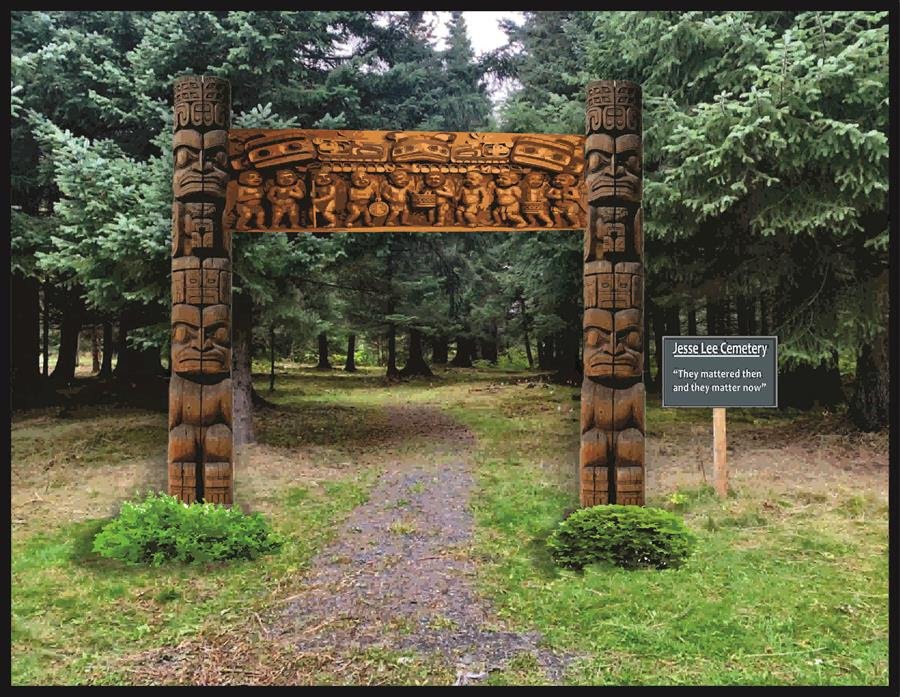
New Archway Entry to the Jesse Lee Cemetery
Let's see what can happen when a group of people who love Alaska join together to bring a project to completion. The giving link is below!
Healing and Honor: The Jesse Lee Cemetery Project
Dear Friends and Supporters of North of Hope,
As we look ahead to the summer of 2026, I'm filled with a profound sense of purpose and gratitude for the journey we're on together. At North of Hope, our nonprofit based in Alaska, we've dedicated ourselves to serving the Qutekcak Native Tribe in Seward. Our work isn't just about projects—it's about building bridges, fostering understanding, and supporting the community's vision for a brighter future. This coming year, our Capstone Project takes us to a place of deep historical significance: the Jesse Lee Cemetery. We're inviting you to join us in this effort, not as outsiders, but as allies in a shared path toward healing.
To understand the importance of this project, we must first acknowledge the painful history it represents. From 1926 to 1964, the Jesse Lee Home operated as a boarding school for Native children in Seward. Like many similar institutions across the Northwest United States and Canada, it was a site of profound hardship. Children were separated from their families, cultures, and languages, often under coercive policies that aimed to assimilate them into dominant society. Tragically, many young lives were lost during this era due to illness, neglect, and the harsh conditions of the time. The Jesse Lee Cemetery became the final resting place for these children—unmarked graves that stood as silent witnesses to untold grief. For decades, this site has symbolized the intergenerational trauma inflicted on Indigenous communities, a wound that echoes through families and tribes to this day.
But history doesn't have to end in sorrow. The Jesse Lee Cemetery Project is about transforming this space into one of dignity, remembrance, and closure. In partnership with the Qutekcak Native Tribe, we're planning thoughtful improvements that honor the past while creating a welcoming environment for reflection and healing. Our key elements include installing gravel pathways to make the cemetery more accessible, ensuring visitors can navigate the grounds with ease and respect. We'll also construct a large entry arch, a symbolic gateway that invites people to enter with reverence. This arch won't just be a structure; it will incorporate elements inspired by Qutekcak traditions, serving as a beacon of cultural pride and resilience.
The photo rendering above represents an artist's rendition of what we plan on creating and installing this coming summer.
Why now? The Qutekcak community has long expressed a desire to reclaim and revitalize this site. For tribal members, it's more than a cemetery—it's a sacred ground where ancestors rest, and where stories of survival can be shared. By enhancing the space, we're helping to provide closure for families who may have never known the full extent of their losses. Imagine a parent or grandparent visiting for the first time, walking a clear path to a loved one's grave, feeling the weight of history lift just a little. This project aligns with broader movements across North America to address the legacies of boarding schools, including truth and reconciliation efforts that emphasize community-led initiatives.
At North of Hope, we see ourselves as true partners in this work. We've collaborated closely with tribal leaders and elders to ensure every decision reflects their priorities and values. Our role is to support, not to lead—to bring resources, volunteers, and expertise that amplify the tribe's voice. For the 2026 season, we're organizing work teams from across the U.S. to assist with construction and site preparation. These teams will include skilled laborers, and anyone passionate about making a difference. It's an opportunity for hands-on involvement, where participants can learn from Qutekcak hosts about the site's history and significance.
Of course, bringing this vision to life requires resources. We're estimating costs for materials, labor, and community engagement events, and we're turning to our generous support base—you—to help make it possible. If this project resonates with you, we invite you to contribute in a way that feels right. Donations can fund gravel for the pathways, lumber for the arch, an engineer for the support footings, or even interpretive signage that shares the stories of those buried there.
The cost of carving this archway is currently unknown. We are in contact with master carvers in Southeast Alaska to find a way to make this happen. Remember, North of Hope planned and built three different Carving Sheds out on Prince of Wales Island and our relationships with the people there remain warm and ongoing. Pray that God will lead us to the right artist/carver!
Every gift, no matter the size, moves us closer to completion. You can give online through our secure portal at northofhope.org/donate, or reach out to our team for other options like planned giving or matching grants. Simply reply to this email to take these steps.
We don't take your support lightly. In a world where demands on our time and resources are constant, we appreciate that choosing to stand with us is a deliberate act of solidarity. For our Qutekcak friends and tribal members reading this: know that North of Hope is committed to being a respectful partner. This project is yours—born from your resilience and guided by your wisdom. We're here to walk alongside you, ensuring that the Jesse Lee Cemetery becomes a place of peace and empowerment for generations to come.
As we prepare for 2026, let's remember that healing isn't a solitary endeavor. It's communal, it's ongoing, and it's strengthened by each of us. Thank you for considering how you might join this meaningful chapter. Together, we're not just building pathways; we're paving the way for hope.
In partnership and gratitude,
Rod & Donna Koop
North of Hope
Your Community Resource

QNT…
is the tribal organization of the Native Community of Seward, Alaska. It is created to promote the unity, self-determination, and empowerment of our members and other Native people residing in the Eastern Kenai Peninsula. Qutekcak provides services that strengthen the people by increasing opportunities, and enhancing their mental, physical, and spiritual well being, in harmony with our land, and heritage.

Lady Justice Prints
Stand for Justice—Frame the Power.
To make a bright future possible for all.
Order Your Lady Justice Print—A Statement of Integrity.
Click this link to order Lady Justice!Historical Overview
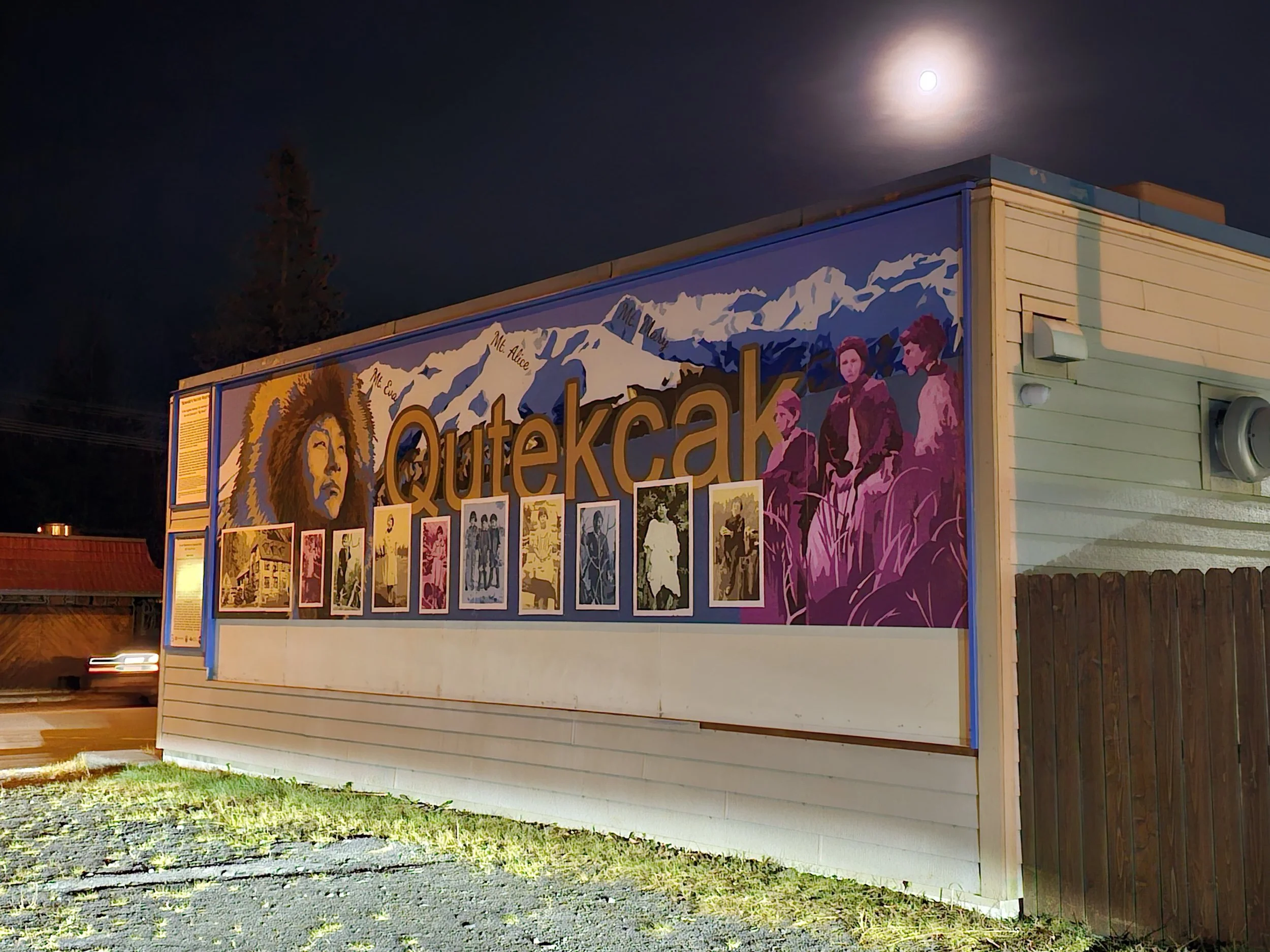
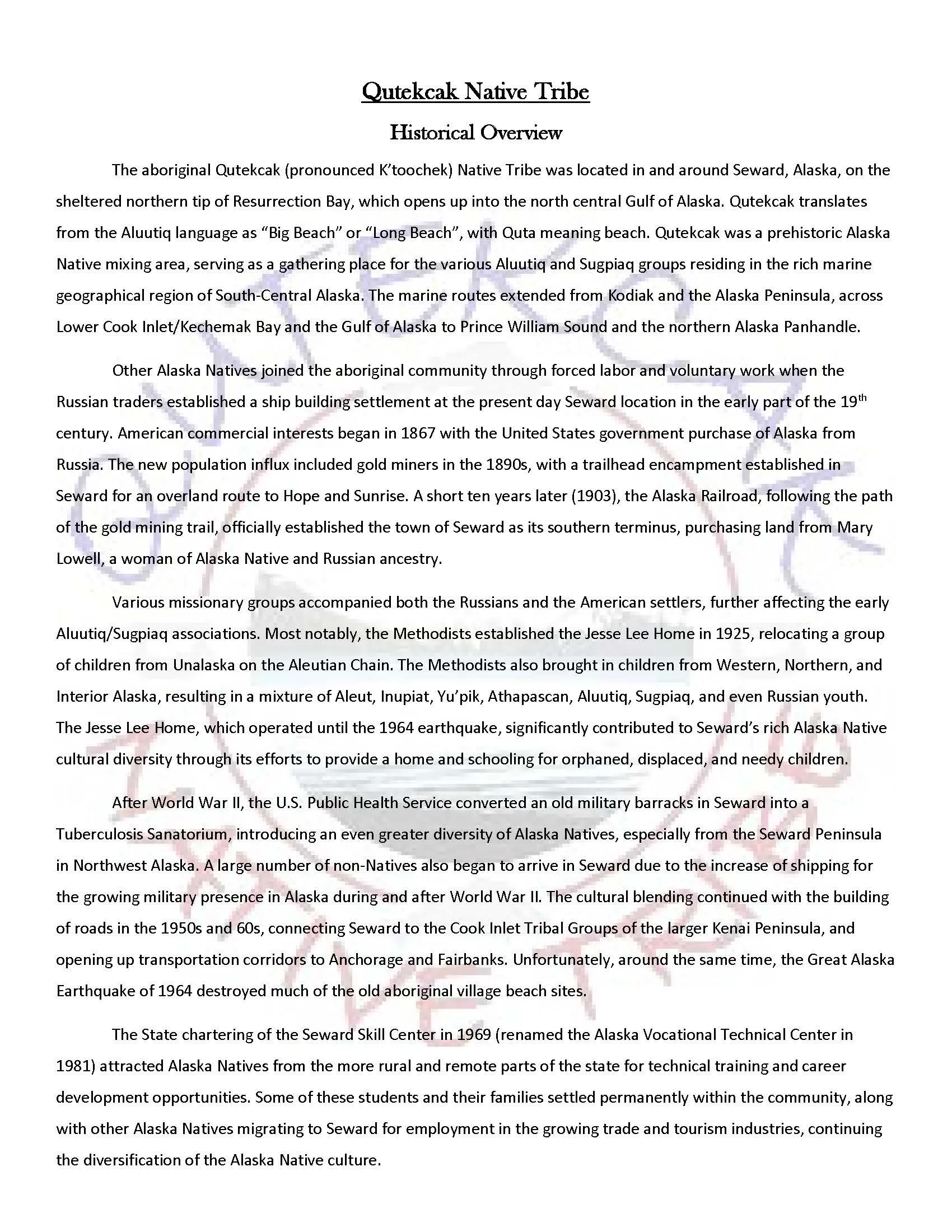
The aboriginal Qutekcak (pronounced K’toochek) Native Tribe was located in and around Seward, Alaska, on the sheltered northern tip of Resurrection Bay, which opens up to the Gulf of Alaska. Qutekcak translates from the Alutiiq language as “Big Beach” (Quta meaning beach). Qutekcak was a prehistoric Alaska Native mixing area, serving as a crossroads for the various Alutiiq and Sugpiaq groups residing in the rich marine geographical region of South Central Alaska, extending from Kodiak and the Alaska Peninsula in the west, across Lower Cook Inlet/Kachemak Bay and the Gulf of Alaska, to the islands of Prince William Sound and the northern Alaska Panhandle in the east.
Other Alaska Natives joined the aboriginal community through forced labor and voluntary work when the Russian traders established a ship building settlement at the present day Seward location in the early part of 19th century. U. S. commercial interests, beginning in 1867 with the U. S. purchase of Alaska from Russia, provided further population influx and mixing. Gold miners arrived in the 1890’s, setting up an encampment as the trail head for the overland route to Hope and Sunrise. Then in 1903 the Alaska Railroad officially established the town of Seward as its southern terminus by purchasing land from Mary Lowell, of mixed Russian and Alaska Native ancestry, and building over an old Native village site.

Jesse Lee Cemetery Memorial: They Mattered Then, They Matter Now
The Jesse Lee Cemetery stands as a sacred place of remembrance for the children who were taken to the Jesse Lee Home in Seward—some who never returned home. It is a place where we honor their lives, acknowledge the truth of our shared history, and commit to healing through truth, remembrance, and unity.

Qutalleq Land Acknowledgement:
Let us acknowledge that we are on the homeland of the Sugpiaq / Alutiiq People, who have lived and thrived on this land for thousands of years.
We ask that you respect and acknowledge the culture, Sugt’stun language and their history.
Let us honor the Native way of life in modern times as they continue their subsistence practices, cultural traditions and speak their language.